
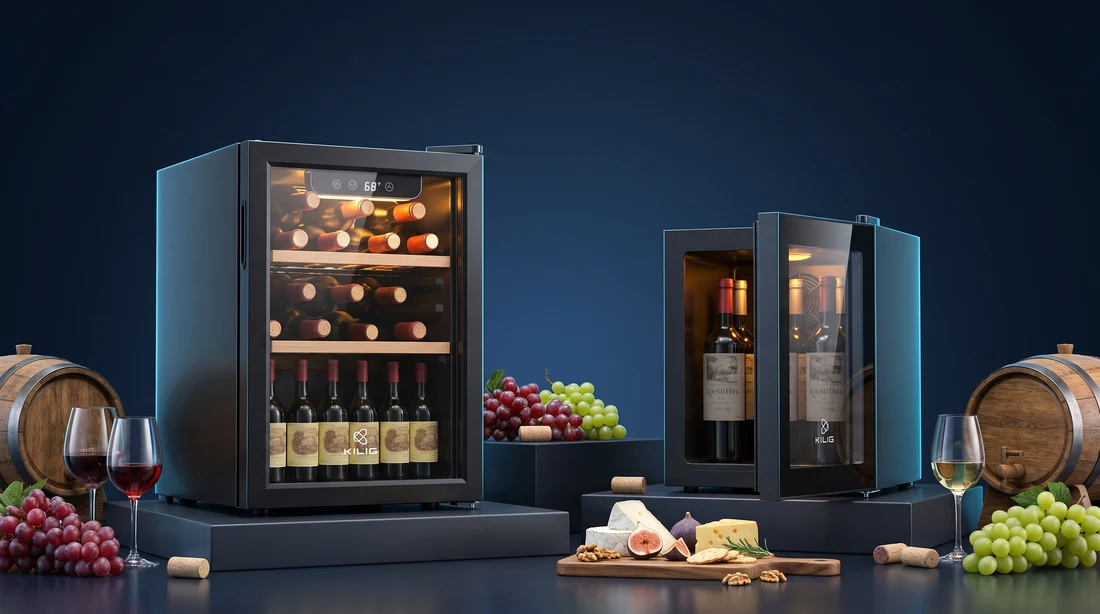
Choosing the best wine cooler for red and white wine involves understanding the specific requirements of each type of wine and selecting a unit that maintains ideal storage conditions. Red and white wines differ in their optimal serving temperatures and aging needs. Red wines generally benefit from slightly warmer temperatures, typically between 55°F and 65°F, while white wines are best stored and served cooler, often between 45°F and 55°F. A good wine cooler should offer precise temperature control to accommodate both types, ensuring that each bottle is preserved and served at its best.
Wine coolers come in various sizes and designs, from compact countertop models to larger freestanding or built-in units. Depending on the space available and the collection size, consumers can choose a cooler that fits their needs. Many modern wine coolers feature dual-zone temperature controls, allowing simultaneous storage of red and white wines at their respective ideal temperatures. This versatility is particularly beneficial for those who enjoy a diverse wine collection or frequently entertain guests with varied preferences.
The construction and features of the cooler also impact its performance. Units with stainless steel or insulated glass doors tend to maintain temperatures more consistently while protecting wines from harmful ultraviolet light, which can degrade wine quality. Vibration reduction technology is another important aspect to consider, as excessive vibrations can disturb sediment in wine bottles, adversely affecting taste. Quiet operation is also valuable for home environments, ensuring the cooler does not become a nuisance.
Capacity is a crucial factor when selecting a Wine Cooler. Smaller models might hold around 12 to 20 bottles, suitable for casual drinkers or those with limited space. Larger models can accommodate 50 bottles or more, ideal for enthusiasts and collectors. It’s important to balance capacity with temperature zones to ensure optimal conditions for different wine types within the same unit.
Energy efficiency and ease of maintenance are additional considerations. Modern wine coolers often incorporate energy-saving technology, reducing electricity consumption while maintaining steady cooling. Removable shelves, digital controls, and interior lighting enhance usability and allow for convenient organization and display of wine bottles.
In summary, the best wine coolers for red and white wine combine precise dual-zone temperature control, effective insulation, reduced vibration, and adequate capacity. Selecting a cooler that fits the space and collection size while offering user-friendly features will help preserve the quality of both red and white wines, making it easier to enjoy them at their ideal temperatures.
