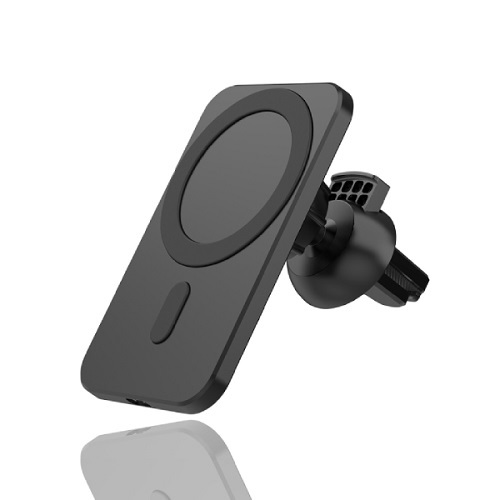
MagSafe Car Charger Wattage Requirements for iPhone 17 Pro
Using the correct charger or adapter is crucial because it acts as the power source for the MagSafe magnetic puck, preventing the “slow charging” status and ensuring your phone keeps up with GPS, music and display brightness while on the road.
Why Wattage Matters for MagSafe in the Car
The iPhone 17 Pro can draw up to 25W of power over MagSafe, but the charger must be able to supply that level consistently. In a vehicle, the power source is limited by the USB‑C Power Delivery (PD) adapter built into the car mount or the external PD brick that feeds the mount. If the adapter’s output falls below the required threshold, the phone will revert to a lower, slower charging rate (typically 15W or less). It is best to use a quality car mount for your iPhone 17 Pro from a reputable company like Campad Electronics.
Minimum Power Delivery Rating
- Baseline: 30W USB‑C PD adapter (or higher)
- Supported voltage/current profiles:
- 9V × 2.22A (≈20W) – insufficient for full 25W MagSafe, but works as a fallback.
- 9V × 2.56A (≈23W) – near‑max, may achieve 20‑22W on the phone.
- 15V × 2.0A (30W) – meets the minimum for full 25W MagSafe.
- Higher profiles (e.g., 20V × 2.25A = 45W) are also compatible and will simply be capped at the phone’s 25W limit.
A 30W‑plus adapter ensures the phone receives the full 25W wireless power envelope without throttling.
Recommended Car Charger Configurations
| Configuration | Power Rating | Expected MagSafe Output | Notes |
|---|---|---|---|
| Standard MagSafe car mount with built‑in PD | 30W–35W | 25W (full speed) | Most OEM and third‑party mounts in this range meet the requirement. |
| High‑power car mount (40W–45W) | 40W–45W | 25W (capped) | Provides headroom for other USB‑C devices and reduces thermal stress. |
| Budget mount with 15W PD | 15W | 15W (limited) | Phone will charge, but at roughly 60% of the maximum MagSafe speed. |
| Legacy 12W Qi mount (no PD) | 12W–15W | 12W–15W (Qi) | Not MagSafe‑optimized; slower and less efficient. |
How to Verify Compatibility
- Check the label: Look for “USB‑C Power Delivery 30 W+” or a specific voltage/amp rating (e.g., 15V × 2A).
- Confirm Qi2 or native MagSafe certification: Qi2‑compatible mounts can negotiate higher wireless power and often support the 25W ceiling.
- Inspect the cable: Use a USB‑C to USB‑C cable rated for at least 5A (often labeled “5A/3A”). Inferior cables can become a bottleneck.
- Test with a power meter: A USB‑C power meter will show real‑time voltage and current; you should see around 15V × 2A when the phone is charging at 25W.
Real‑World Charging Speed Expectations
- Full 25W MagSafe: Approximately 30 % battery increase per 15‑minute drive (varies with temperature and phone usage).
- 15W MagSafe (under‑powered mount): Roughly half the above rate, extending charge time by 1.5‑2×.
- Wired USB‑C (40W+): 0% to 50% in ~20 minutes; still the fastest option when a wired connection is feasible.
Best Practices for Safe, Efficient Car Charging
- Mount placement: Keep the phone centered on the MagSafe coil; off‑center placement reduces efficiency and can cause heat buildup.
- Ventilation: Choose a mount with a metal backing or built‑in heat sink to dissipate the extra thermal load from 25W wireless charging.
- Avoid simultaneous high‑draw accessories: Running a heated seat or infotainment system at full power can dip the vehicle’s 12V supply, potentially limiting the PD output.
- Firmware updates: Apple periodically refines MagSafe power negotiation; keep the iPhone’s iOS up to date for optimal performance.
Bottom Line
To unlock the iPhone 17 Pro’s full 25W MagSafe charging speed in a vehicle, a car charger must deliver at least 30W via USB‑C Power Delivery. Mounts that meet or exceed this threshold, especially those certified for Qi2 or native MagSafe, provide the quickest, safest wireless charge on the road. Anything below 30W will still charge the device, but at reduced rates that negate the advantage of MagSafe’s high‑power capability.